
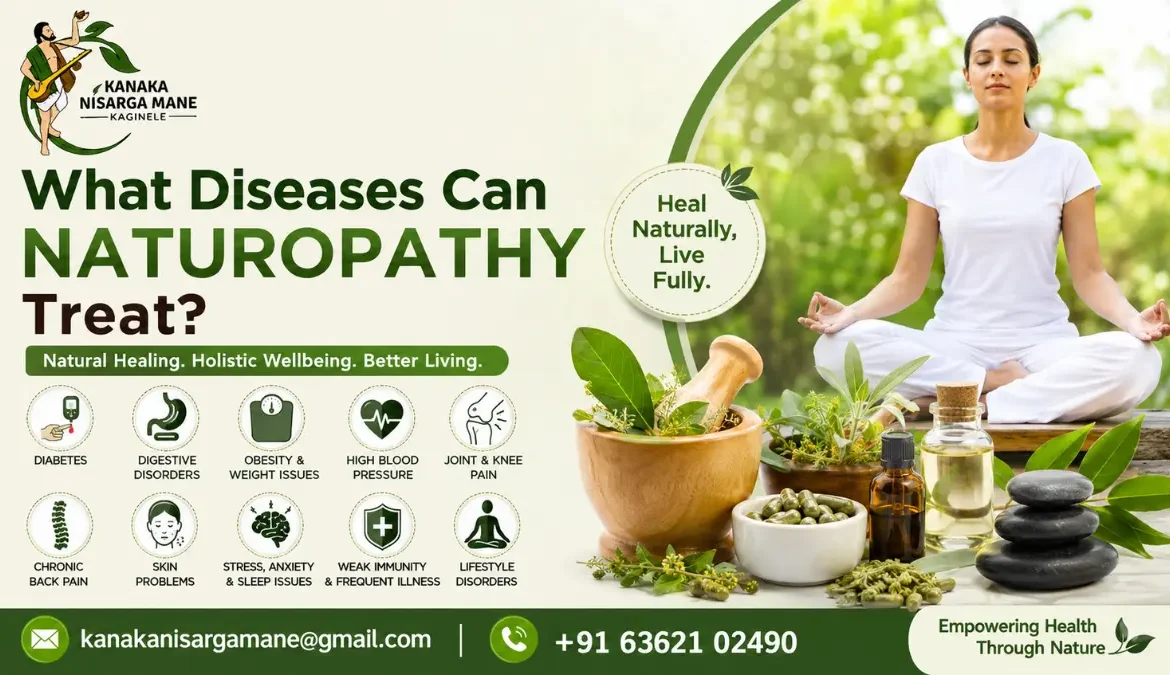
What Diseases Can Naturopathy Treat: Naturopathy is a holistic approach to healthcare that focuses on supporting the body’s natural healing processes through lifestyle changes, nutrition, physical therapies, yoga, stress management, and other natural approaches. But what diseases can naturopathy treat?
Naturopathy may be used as part of a comprehensive care plan for several chronic health conditions, particularly when the goal is to improve overall health, manage symptoms, and address lifestyle-related risk factors. At Kanaka Nisarga Mane, Kaginele, Karnataka, naturopathy is combined with Ayurveda, physiotherapy, yoga, meditation, and personalised nutrition to provide an individualised wellness approach.
Important: Naturopathy should not be considered a replacement for necessary medical diagnosis or emergency treatment. People with serious or chronic illnesses should work with qualified healthcare professionals and should not stop prescribed medicines without medical advice.
What Is Naturopathy?
Naturopathy is a system of holistic healthcare that emphasises healthy nutrition, physical activity, adequate rest, stress management, and natural therapies. The approach generally considers physical, mental, and lifestyle factors rather than focusing only on individual symptoms.
Depending on a person’s condition, a naturopathy programme may include:
- Personalised nutrition and dietary guidance
- Yoga and meditation
- Hydrotherapy
- Massage and other manual therapies
- Therapeutic exercises
- Lifestyle modification
- Stress-management techniques
- Breathing practices
- Selected natural therapies under professional supervision
The exact treatment plan should be based on an individual’s health history, symptoms, medications, and medical needs.
What Diseases Can Naturopathy Help Manage?
Naturopathy is most commonly considered for chronic conditions and lifestyle-related health concerns. The level of evidence varies considerably between conditions, so treatment should be individualised and medically supervised when appropriate.
1. Type 2 Diabetes
Lifestyle management is an important part of type 2 diabetes care. Nutrition, physical activity, weight management, sleep, and stress reduction can support blood-glucose management.
Naturopathy may complement conventional diabetes care by focusing on:
- Healthy meal planning
- Physical activity
- Weight management
- Stress reduction
- Sleep and lifestyle habits
People with diabetes should continue monitoring blood glucose and taking prescribed medication unless their doctor advises otherwise.
2. Obesity and Weight Management
Naturopathy can support healthy weight management by addressing dietary habits, physical activity, sleep, stress, and daily routines.
A personalised programme may include nutrition counselling, exercise, yoga, behavioural changes, and sustainable eating habits rather than extreme diets.
3. Digestive and Gut-Health Problems
Some people seek naturopathic care for digestive concerns such as constipation, indigestion, bloating, and symptoms associated with functional gastrointestinal disorders.
A holistic programme may focus on:
- Dietary patterns
- Adequate fibre and fluids where appropriate
- Eating habits
- Physical activity
- Stress management
- Sleep
Persistent abdominal pain, unexplained weight loss, blood in stool, recurrent vomiting, or other warning signs require medical evaluation.
4. High Blood Pressure
Healthy lifestyle changes are fundamental to cardiovascular health. Nutrition, regular physical activity, maintaining a healthy weight, stress management, and adequate sleep may support blood-pressure management.
Naturopathy can complement medical treatment, but high blood pressure should not be left untreated. Patients taking antihypertensive medicines should not discontinue them without professional advice.
5. Joint Pain and Knee Pain
Joint and knee pain can result from osteoarthritis, injuries, inflammation, muscle weakness, or other conditions.
Depending on the diagnosis, an integrative programme may incorporate:
- Therapeutic exercise
- Physiotherapy
- Weight management
- Yoga and mobility exercises
- Manual therapies
- Selected naturopathic approaches
At Kanaka Nisarga Mane, naturopathy is complemented by physiotherapy for appropriate musculoskeletal concerns.
6. Chronic Back Pain
Chronic back pain can affect mobility, sleep, work, and quality of life. Exercise-based rehabilitation, posture education, mobility work, stress management, and healthy weight management can form part of a comprehensive approach.
Because back pain can have many causes, proper assessment is important before beginning treatment.
7. Skin Problems
Some people explore holistic care for recurring skin concerns such as acne or eczema. Naturopathy may focus on nutrition, lifestyle, stress management, and general wellness alongside appropriate dermatological care.
Skin conditions can have multiple causes, so persistent or severe symptoms should be assessed by a qualified medical professional.
8. Stress, Anxiety and Sleep Problems
Stress can affect sleep, digestion, energy, concentration, and general wellbeing. Yoga, meditation, breathing exercises, physical activity, relaxation techniques, and healthy routines may help improve stress management and sleep quality.
Naturopathy should complement—not replace—professional mental-health care when someone has significant anxiety, depression, or another mental-health condition.
9. Lifestyle-Related Health Conditions
Naturopathic programmes often place strong emphasis on prevention and healthy lifestyle habits. This can be particularly relevant for people with risk factors such as:
- Sedentary lifestyle
- Poor dietary habits
- Excess body weight
- Chronic stress
- Poor sleep
- Low physical activity
Improving these factors can contribute to better long-term health and may help reduce the risk of several chronic diseases.
Can Naturopathy Cure Diseases?
The word “cure” should be used carefully. There is no single naturopathic treatment that can cure every disease.
For some chronic conditions, lifestyle interventions can improve symptoms or help manage important risk factors. However, conditions such as diabetes, hypertension, heart disease, cancer, autoimmune disorders, and serious infections may require conventional medical diagnosis and treatment.
The safest approach is to use naturopathy as part of an appropriately supervised, integrated healthcare plan when suitable.
Naturopathy vs. Conventional Medical Treatment
Naturopathy and conventional medicine can sometimes complement each other, but they have different approaches.
Conventional medicine is essential for diagnosis, emergency care, surgery, prescription medicines, and many evidence-based treatments for serious diseases.
Naturopathy generally places greater emphasis on:
- Lifestyle modification
- Nutrition
- Physical activity
- Stress management
- Natural and physical therapies
- Preventive health
- Whole-person care
A qualified healthcare professional can help determine which approaches are appropriate for your condition.
Why Choose a Personalised Naturopathy Programme?
Every person’s health needs are different. Factors such as age, medical history, medications, diet, activity level, sleep, and stress can influence the appropriate treatment approach.
At Kanaka Nisarga Mane, personalised wellness programmes may combine naturopathy with Ayurveda, physiotherapy, yoga, meditation, and nutrition according to individual needs.
The aim is to support healthier lifestyle habits while addressing the person’s overall wellbeing.
When Should You See a Doctor?
Naturopathy should not delay medical attention. Seek appropriate medical care for symptoms such as:
- Chest pain or difficulty breathing
- Sudden weakness or confusion
- Severe or persistent abdominal pain
- Unexplained bleeding
- Very high or uncontrolled blood pressure
- Severely abnormal blood sugar
- Persistent fever
- Sudden neurological symptoms
- Rapid or unexplained weight loss
If you have been diagnosed with a chronic disease, discuss complementary therapies with your doctor, particularly if you take prescription medicines.
FAQs
1. What diseases can naturopathy treat?
Naturopathy may help support the management of several chronic and lifestyle-related health conditions, including type 2 diabetes, obesity, digestive problems, high blood pressure, joint and knee pain, stress, sleep problems, and some skin concerns. Treatment should be personalised and used appropriately alongside conventional medical care.
2. Can naturopathy cure diabetes?
Naturopathy should not be described as a cure for diabetes. Healthy nutrition, physical activity, weight management, stress reduction, and other lifestyle measures may support diabetes management. People with diabetes should continue prescribed treatment unless their doctor advises otherwise.
3. Can naturopathy help with knee pain?
Yes, naturopathy may be part of an integrated approach to appropriate causes of knee pain. Depending on the diagnosis, treatment may include therapeutic exercises, physiotherapy, yoga, weight management, and selected natural therapies.
4. Is naturopathy good for digestive problems?
Naturopathy may support people experiencing certain digestive concerns such as constipation, bloating, indigestion, and functional gastrointestinal symptoms through personalised nutrition, lifestyle changes, stress management, and physical activity.
5. Can naturopathy help with high blood pressure?
Lifestyle measures such as a balanced diet, regular exercise, maintaining a healthy weight, stress management, and adequate sleep can support blood-pressure management. Naturopathy should complement, rather than replace, medically prescribed treatment for hypertension.
6. Is naturopathy safe for chronic diseases?
Naturopathy can be appropriate for some people with chronic conditions when properly supervised. However, certain natural products and therapies may interact with medicines or be unsuitable for particular health conditions. Professional assessment is recommended.
7. Can naturopathy replace conventional medical treatment?
No. Naturopathy should not replace necessary medical diagnosis, emergency treatment, surgery, or prescribed medicines. It may be used as a complementary approach where appropriate.
8. How does naturopathy treatment work?
Naturopathy generally focuses on identifying lifestyle and health factors that may affect wellbeing. A personalised programme may include nutrition, exercise, yoga, meditation, stress management, hydrotherapy, and other natural or physical therapies.
9. Who can benefit from naturopathy?
People seeking support for lifestyle improvement, chronic-condition management, stress reduction, healthy weight management, digestive wellness, or general wellbeing may benefit from an appropriately designed naturopathy programme.
10. Where can I get naturopathy treatment in Karnataka?
Kanaka Nisarga Mane in Kaginele, Karnataka, provides integrated naturopathy, Ayurveda, physiotherapy, yoga, meditation, and personalised nutrition services. For consultations, call +91 63621 02490.


