
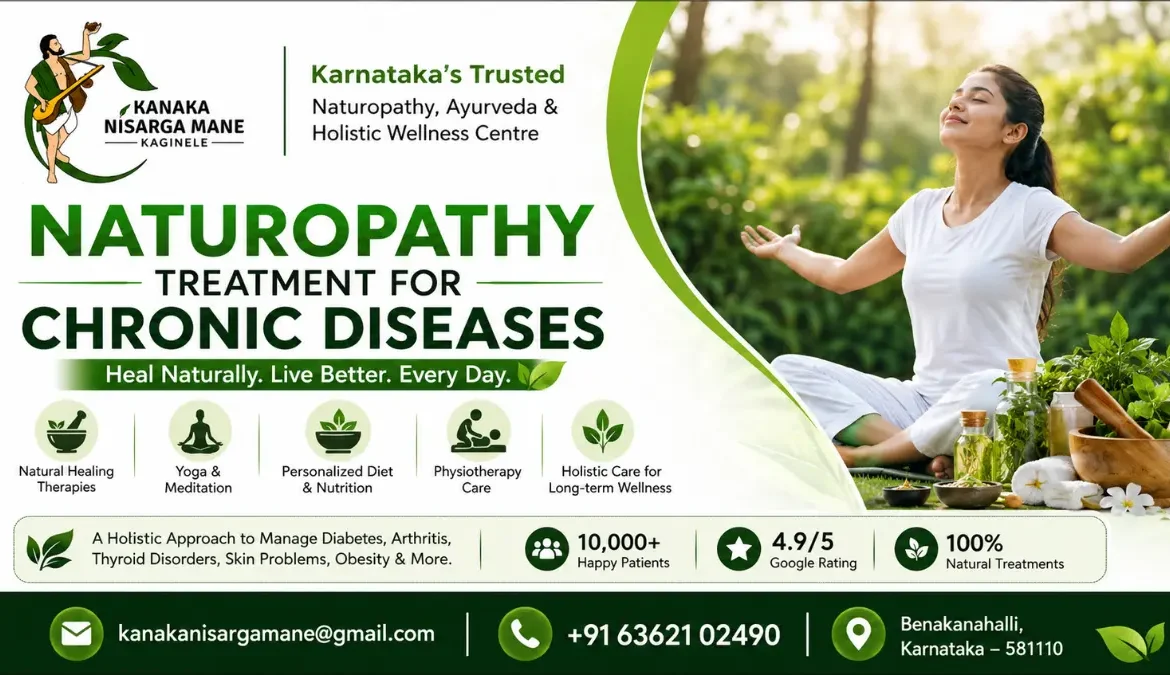
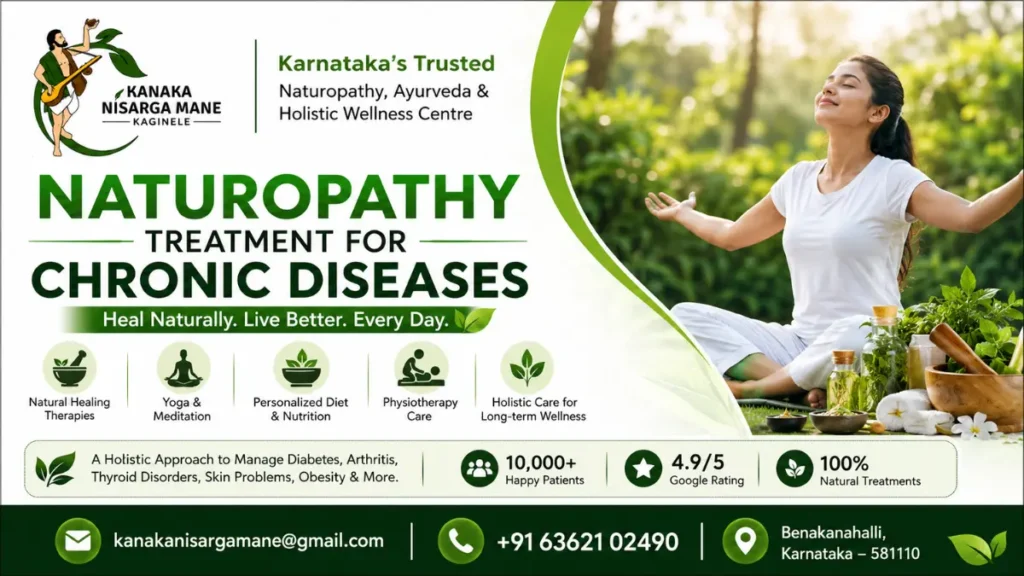
Naturopathy Treatment for Chronic Diseases: Living with a chronic health condition can affect much more than physical health. Persistent symptoms, medications, reduced mobility, stress, sleep problems, and lifestyle limitations can gradually affect everyday quality of life. For many people, managing a chronic condition requires more than addressing individual symptoms—it also involves nutrition, physical activity, stress management, sleep, and sustainable lifestyle changes.
Naturopathy treatment for chronic diseases takes a holistic approach by focusing on lifestyle, nutrition, natural therapies, physical activity, and overall wellbeing. Depending on the individual’s condition, naturopathy may also be integrated with Ayurveda, yoga, physiotherapy, and nutritional guidance under professional supervision.
At Kanaka Nisarga Mane, Benakanahalli/Kaginele, Karnataka, patients can explore personalised naturopathy and integrative wellness programs designed around their individual health needs.
What Is Naturopathy Treatment for Chronic Diseases?
Naturopathy is a holistic system of care that emphasizes healthy lifestyle practices and supportive natural therapies. Instead of looking only at a single symptom, the approach considers factors such as diet, physical activity, sleep, stress, digestion, mobility, and daily habits.
For people living with chronic conditions, naturopathy may be used as a complementary approach to conventional medical care, helping support healthier lifestyle habits and long-term disease management.
It is important to understand that chronic diseases can require ongoing medical monitoring. Naturopathy should not be considered a replacement for prescribed medication or emergency medical treatment.
Which Chronic Conditions May Benefit From a Naturopathic Approach?
A personalised naturopathy program may support people managing a range of long-term health concerns. The suitability of any therapy depends on the individual’s diagnosis, medical history, medications, age, and overall health.
Common areas of integrative care include:
| Chronic Health Concern | Possible Areas of Support |
|---|---|
| Diabetes | Nutrition, physical activity, weight management and lifestyle support |
| Obesity & weight concerns | Personalised diet, exercise and behavioural changes |
| Joint and knee pain | Physiotherapy, mobility exercises, lifestyle and supportive therapies |
| Digestive concerns | Dietary guidance, healthy eating habits and lifestyle management |
| Stress-related concerns | Yoga, breathing exercises, relaxation and sleep-supportive habits |
| Lifestyle-related health problems | Nutrition, exercise, stress management and healthy routines |
| Chronic musculoskeletal pain | Physiotherapy, therapeutic exercise and mobility support |
| Skin-related concerns | Individualised nutrition and holistic lifestyle support |
The goal is not to promise a “cure” for every chronic disease. Instead, an appropriate integrative plan can focus on supporting better daily functioning, healthy habits, symptom management, and quality of life.
How Naturopathy Can Support Chronic Disease Management
1. Personalised Health Assessment
Chronic conditions do not affect everyone in the same way. A person’s diet, activity level, sleep pattern, stress, medical history, and existing treatment can all influence their health.
A personalised consultation helps practitioners understand these factors before recommending a wellness program.
2. Nutrition and Dietary Guidance
Nutrition plays an important role in long-term health. A personalised food plan may focus on balanced meals, adequate protein and fibre, nutrient-dense foods, hydration, and appropriate portion sizes.
At Kanaka Nisarga Mane, personalised nutrition programs are designed around individual health goals and may include nutritional counselling and healthy-eating guidance.
3. Physical Activity and Therapeutic Exercise
Regular physical activity can be an important part of chronic disease management. Exercise recommendations should be appropriate for the individual’s age, mobility, fitness level, and medical condition.
For people experiencing pain or reduced mobility, physiotherapy and supervised therapeutic exercises can help support movement and physical function.
4. Yoga, Breathing and Relaxation
Chronic health conditions can sometimes be accompanied by stress and poor sleep. Yoga, meditation, pranayama, and relaxation practices may be incorporated into a wellness program to encourage physical and mental relaxation.
These practices should be adapted to the person’s ability and health status.
5. Hydrotherapy and Other Natural Therapies
Naturopathy may include selected hydrotherapy techniques and other natural therapies. The appropriate therapy depends on the person’s condition and should be recommended following a professional assessment.
6. Lifestyle Modification
Long-term health improvement often depends on sustainable daily habits. A naturopathic wellness program may address:
- Eating patterns
- Physical activity
- Sleep routines
- Stress management
- Weight management
- Hydration
- Posture and movement
- Daily relaxation
- Healthy behavioural habits
The emphasis is on changes that a person can realistically maintain over time.
Naturopathy and Diabetes Management
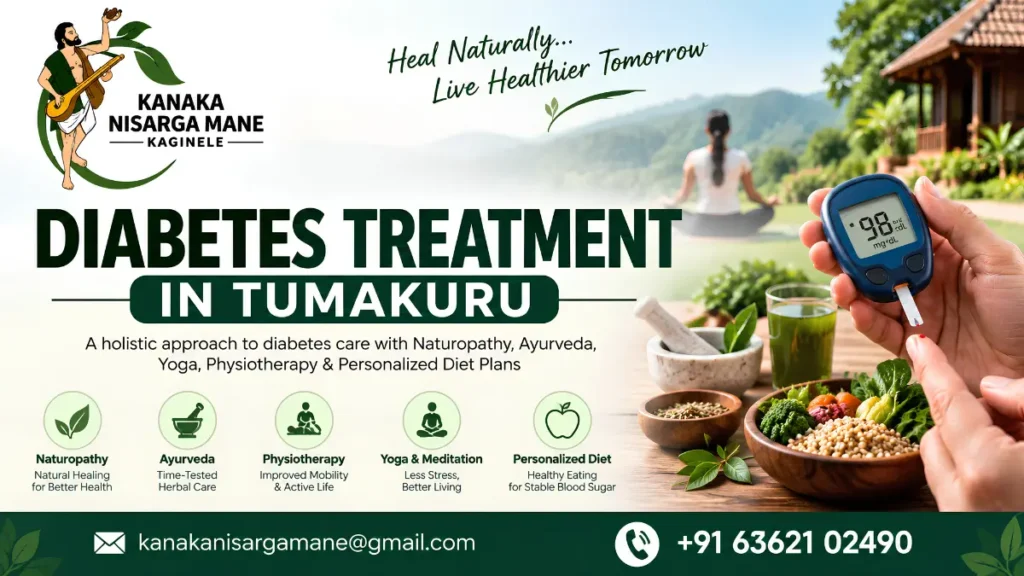
Diabetes is a chronic condition that requires regular monitoring and appropriate medical care. Lifestyle factors such as nutrition, physical activity, body weight, and stress can also play an important role in overall diabetes management.
Kanaka Nisarga Mane describes an integrated approach that combines naturopathy with Ayurveda, physiotherapy, nutritional guidance, physical activity, and stress-management practices. Its diabetes program includes personalised dietary guidance, exercise planning, hydrotherapy where appropriate, and ongoing education.
Important: People with diabetes should not stop insulin or other prescribed medicines because they are undergoing naturopathy or Ayurveda treatment. Any medication changes should be made with the treating medical professional.
Naturopathy for Chronic Knee and Joint Pain
Chronic knee pain can result from conditions such as osteoarthritis, previous injuries, overuse, or other musculoskeletal problems.
A holistic program may combine naturopathy with physiotherapy, therapeutic exercise, nutrition, mobility work, and selected supportive therapies. Kanaka Nisarga Mane’s knee-pain program describes an integrated approach involving Ayurveda, naturopathy, physiotherapy, nutritional guidance, hydrotherapy, exercise therapy, and manual therapy.
For persistent or severe pain, proper assessment is important because the underlying cause determines the most appropriate treatment.
Why Choose an Integrated Approach?
One advantage of an integrated wellness model is that different aspects of health can be considered together.
For example, someone dealing with chronic joint pain may need more than pain-focused care. Their program might also consider:
Pain → Mobility → Exercise → Nutrition → Weight management → Daily habits → Long-term follow-up
Similarly, a person managing diabetes may benefit from coordinated attention to nutrition, physical activity, stress, sleep, and medical monitoring.
This broader perspective can make lifestyle changes more practical and sustainable.
Naturopathy Treatment at Kanaka Nisarga Mane
Kanaka Nisarga Mane is a naturopathy, Ayurveda, physiotherapy, yoga, and holistic wellness centre located in Benakanahalli/Kaginele, Karnataka.
The centre states that its approach includes doctor-assessed personalised naturopathy plans, Ayurveda, physiotherapy, therapeutic exercises, nutritional guidance, yoga, and other wellness services.
Its website also highlights an integrated approach for specific concerns such as diabetes and knee pain, combining naturopathy with Ayurveda, physiotherapy, diet, exercise, and supportive therapies.
Key Wellness Services
- Naturopathy
- Ayurveda
- Physiotherapy
- Yoga and meditation
- Personalised nutrition
- Therapeutic exercise
- Lifestyle guidance
- Selected hydrotherapy
- Wellness accommodation
- Follow-up support
What Can You Expect During a Consultation?
A chronic disease wellness consultation may begin with an assessment of your current health concerns, lifestyle, diet, physical activity, medical history, and existing treatment.
Depending on your individual requirements, the practitioner may recommend a combination of:
- Health and lifestyle assessment
- Personalised nutrition guidance
- Appropriate naturopathic therapies
- Yoga or breathing practices
- Therapeutic exercise
- Physiotherapy where required
- Lifestyle modification
- Follow-up and progress monitoring
The exact treatment plan should always be individualised rather than applying the same therapy to every patient.
Who Should Consider Naturopathy for Chronic Conditions?
Naturopathy may be worth discussing with a qualified practitioner if you are looking for additional support with:
- Healthy lifestyle changes
- Nutrition and weight management
- Physical activity
- Stress management
- Chronic musculoskeletal discomfort
- General wellness
- Long-term lifestyle improvement
However, people with serious or complex medical conditions should discuss complementary therapies with their treating doctor before making changes to their existing care.
Is Naturopathy a Replacement for Conventional Medical Treatment?
No.
Naturopathy should not automatically replace evidence-based medical treatment, particularly for conditions such as diabetes, cardiovascular disease, kidney disease, cancer, severe infections, or other potentially serious conditions.
A safer approach is to use complementary wellness practices alongside appropriate medical care when suitable. Always inform your healthcare providers about supplements, herbal products, or other therapies you are using because they may interact with medicines.
Why Personalisation Matters in Chronic Disease Care
There is no single naturopathy treatment that is appropriate for everyone.
Two people with the same diagnosis may have very different:
- Symptoms
- Dietary habits
- Activity levels
- Medical histories
- Medication requirements
- Stress levels
- Sleep patterns
- Physical limitations
That is why an individual assessment is an important part of responsible chronic disease wellness care.
FAQs
1. What is naturopathy treatment for chronic diseases?
Naturopathy treatment for chronic diseases is a holistic approach that may combine nutrition, lifestyle modification, physical activity, yoga, relaxation practices, and selected natural therapies. It is generally used as complementary support alongside appropriate medical care.
2. Can naturopathy cure chronic diseases permanently?
Naturopathy should not be promoted as a guaranteed cure for chronic diseases. Chronic conditions often require long-term management, regular monitoring, and evidence-based medical treatment. Naturopathy may be considered as complementary support for lifestyle and overall wellbeing.
3. Which chronic diseases can be supported with naturopathy?
Depending on the individual’s health condition, naturopathic and integrative care may support areas such as diabetes management, chronic pain, joint discomfort, weight management, digestive concerns, stress, and lifestyle-related health issues. The appropriate approach varies from person to person.
4. Is naturopathy safe for people with chronic conditions?
Safety depends on the therapy, the person’s medical condition, medications, and overall health. Some complementary approaches may be appropriate for certain people but require modification or professional supervision.
5. Can naturopathy be taken along with regular medical treatment?
Yes, naturopathy may be used as a complementary approach rather than replacing conventional treatment. It is important to tell all healthcare providers about the therapies, supplements, or natural products being used so potential interactions can be considered.
6. Can naturopathy help with diabetes management?
Naturopathy may provide lifestyle and nutritional support for people managing diabetes. However, diabetes requires appropriate medical monitoring, and naturopathy should not replace prescribed diabetes medicines or insulin.
7. Can naturopathy help with chronic knee pain?
A personalised program may combine physiotherapy, therapeutic exercise, yoga, nutrition, and selected complementary therapies to support mobility and pain management. Evidence for complementary approaches varies depending on the specific condition and therapy.
8. Does naturopathy include diet and nutrition plans?
Yes. Personalised nutrition can be an important part of naturopathic wellness care. A plan may consider the individual’s health goals, dietary habits, activity level, and specific health requirements.
9. Can yoga be included in naturopathy treatment?
Yes. Yoga, breathing exercises, meditation, and relaxation practices may be incorporated into an individual wellness program when appropriate. Research suggests some mind-body practices can provide benefits for certain chronic pain and wellness concerns.
10. Can naturopathy help manage chronic pain?
Some complementary approaches, including yoga, mindfulness, massage, tai chi, and other non-drug approaches, may provide modest benefits for certain chronic pain conditions. However, effectiveness varies by condition and individual.
11. How is naturopathy different from conventional medical treatment?
Conventional medicine generally focuses on diagnosing and treating disease using established medical interventions. Naturopathy takes a broader lifestyle-oriented approach that may include nutrition, physical activity, natural therapies, and wellbeing practices. They can sometimes be used together as part of an integrative approach.
12. How long does naturopathy treatment for chronic diseases take?
There is no standard treatment duration. Chronic disease management depends on the condition, individual health status, treatment goals, lifestyle changes, and response to care. A practitioner can recommend an appropriate program after assessment.
13. Is naturopathy suitable for older adults with chronic diseases?
Older adults may be able to participate in selected naturopathic and complementary practices, but treatment should be adapted to their age, mobility, medical conditions, and medications. Professional assessment is especially important when multiple medicines or health conditions are involved.
14. Can naturopathy help with lifestyle-related health problems?
Naturopathy may support healthier lifestyle habits through nutrition, physical activity, sleep routines, stress management, and behavioural changes. These factors can be important components of long-term health management.
15. Can naturopathy replace prescription medicines?
No. People should not stop, reduce, or change prescription medicines without consulting the healthcare professional who prescribed them. Complementary approaches should not be used as a reason to delay necessary medical treatment.
16. Are natural treatments always safe?
No. “Natural” does not automatically mean safe. Certain herbal products and dietary supplements can cause side effects or interact with prescription medicines. Always discuss supplements and natural products with your healthcare provider.
17. What can I expect during a naturopathy consultation?
A consultation may include discussion of your health concerns, medical history, lifestyle, diet, physical activity, sleep, and existing treatments. Based on the assessment, an individualised wellness program may be suggested.
18. Why is personalised treatment important for chronic diseases?
People with the same diagnosis can have different symptoms, medications, dietary habits, physical abilities, and lifestyle factors. Personalisation helps ensure that recommended therapies and lifestyle changes are appropriate for the individual’s circumstances.


