

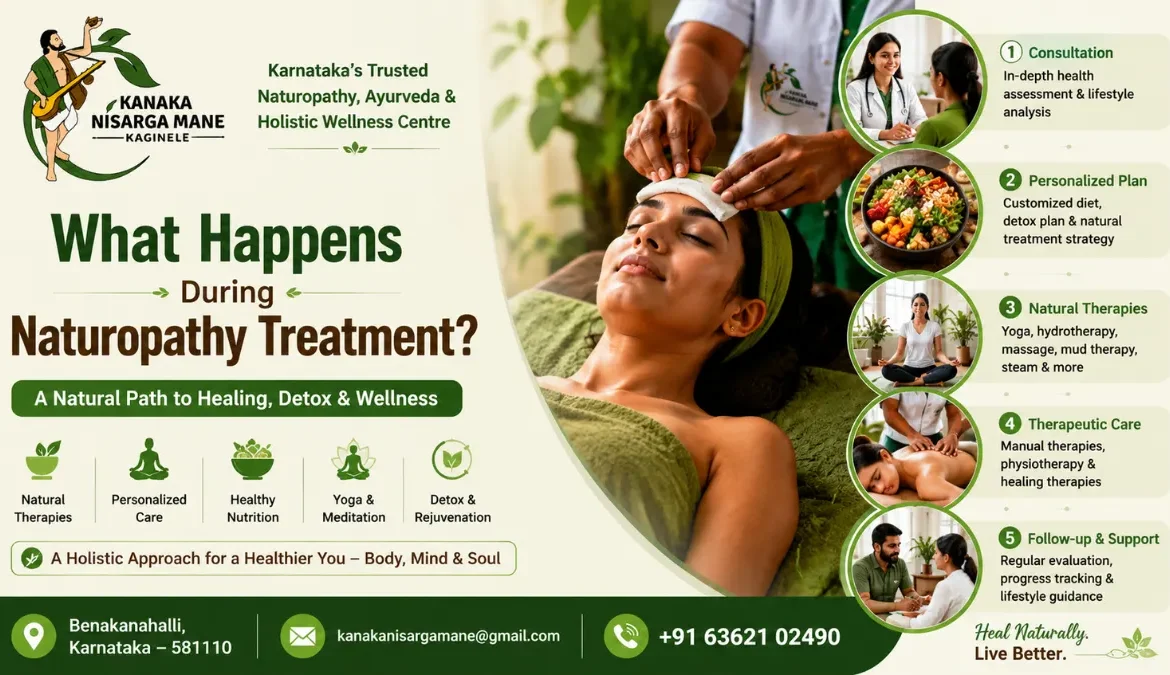
What Happens During Naturopathy Treatment: Naturopathy treatment is a holistic approach that focuses on improving overall wellbeing through natural therapies, healthy lifestyle practices, nutrition, physical activity, relaxation techniques and other individualized approaches. Unlike a one-size-fits-all treatment, naturopathy may begin with understanding a person’s health history, daily habits, diet, stress levels and specific health concerns.
If you are considering naturopathy treatment in Karnataka, it is useful to understand what normally happens during a naturopathy consultation and treatment program.
At Kanaka Nisarga Mane, located in Benakanahalli, Karnataka, naturopathy is offered alongside Ayurveda, physiotherapy, yoga, meditation and personalized nutrition support.
| Stage | What Happens |
|---|---|
| 1. Consultation | Health & lifestyle assessment |
| 2. Personalized Plan | Diet & wellness plan |
| 3. Natural Therapies | Yoga, hydrotherapy & other therapies |
| 4. Therapeutic Care | Manual therapy & physiotherapy |
| 5. Follow-Up | Progress review & lifestyle guidance |
Important: Naturopathy includes different therapies depending on the practitioner and the person’s needs. Scientific evidence also varies considerably between individual naturopathic practices. Naturopathy should not be used to delay or replace medically necessary conventional treatment.
What Is Naturopathy Treatment?
Naturopathy is a complementary health approach that generally emphasizes lifestyle, nutrition, physical activity, stress management and selected natural or practitioner-guided therapies. Depending on the practitioner and treatment setting, approaches may include dietary counseling, exercise therapy, relaxation techniques, manual therapies, herbal products and other interventions.
The exact treatment plan can differ from person to person. Someone seeking support for lifestyle-related concerns may receive a different plan from someone attending for pain management, digestive concerns or general wellness.
What Happens During Naturopathy Treatment?
Although every naturopathy program is individualized, the process commonly includes several stages.
1. Initial Consultation and Health Assessment
The first step is usually a detailed consultation.
A practitioner may ask about:
- Your main health concerns
- Previous illnesses and treatments
- Current medications and supplements
- Eating habits
- Sleep patterns
- Physical activity
- Stress and daily routine
- Previous medical reports
- Lifestyle and personal health goals
A practitioner may also conduct an appropriate physical assessment and review relevant medical information.
This initial assessment helps create a personalized wellness plan rather than applying the same therapy to every individual.
2. Understanding Your Diet and Lifestyle
Nutrition and lifestyle are important parts of many naturopathy programs.
The practitioner may discuss:
- Meal timings
- Food choices
- Hydration
- Physical activity
- Sleep routine
- Stress management
- Daily habits
A personalized diet plan may then be recommended according to the person’s health goals and overall needs.
At Kanaka Nisarga Mane, the provided centre information states that personalized nutrition plans are offered for areas such as weight management and specific health goals, along with nutritional counseling and healthy-eating support.
3. Creating a Personalized Treatment Plan
After the assessment, the practitioner may recommend a combination of therapies.
Depending on the person’s needs, a naturopathy program may incorporate:
- Nutrition and dietary guidance
- Yoga
- Meditation and relaxation practices
- Therapeutic exercise
- Hydrotherapy
- Manual therapies
- Lifestyle modification
- Selected herbal or natural products
- Physiotherapy when appropriate
Naturopathy can involve multiple approaches rather than one single procedure. NCCIH notes that naturopathic practitioners may use dietary and lifestyle changes, stress reduction, exercise therapy, herbs and supplements, manipulative therapies and practitioner-guided detoxification, among other approaches.
4. Natural and Physical Therapies
Depending on the individual’s assessment, the treatment program may include natural or physical therapies.
For example, some naturopathic settings use water-based therapies, therapeutic exercises, massage or other physical techniques. The specific therapy should depend on the person’s health status and suitability.
At Kanaka Nisarga Mane, the centre describes its approach as including naturopathy, Ayurveda, physiotherapy, yoga and nutrition.
The goal should be to select appropriate therapies rather than assuming that every patient requires every available treatment.
5. Yoga, Breathing and Meditation
Yoga, breathing exercises and meditation may form part of a holistic wellness program.
These practices can support relaxation, physical activity and healthy lifestyle habits. Research summarized by NCCIH indicates that yoga may benefit general wellness, stress, sleep, balance and some pain-related conditions, although outcomes depend on the specific condition and practice.
A practitioner or qualified instructor may modify exercises according to a person’s physical ability.
6. Diet and Nutrition Guidance
Food is often an important part of naturopathy-based wellness programs.
Instead of simply providing a generic diet chart, a practitioner may consider:
- Current eating habits
- Activity level
- Health goals
- Food preferences
- Meal patterns
- Existing medical conditions
- Current medications
- Nutritional requirements
The objective is to develop sustainable eating habits rather than relying on short-term restrictive diets.
If you have diabetes, kidney disease, are pregnant, take prescription medication or have another significant medical condition, dietary changes should be discussed with an appropriately qualified healthcare professional.
7. Monitoring Your Progress
Naturopathy treatment is generally not just about the first consultation.
During follow-up visits, practitioners may discuss:
- Changes in symptoms
- Diet adherence
- Sleep
- Energy levels
- Physical activity
- Lifestyle changes
- Response to therapies
- Any difficulties with the treatment plan
The treatment plan may be adjusted according to the person’s progress and individual circumstances.
How Long Does Naturopathy Treatment Take?
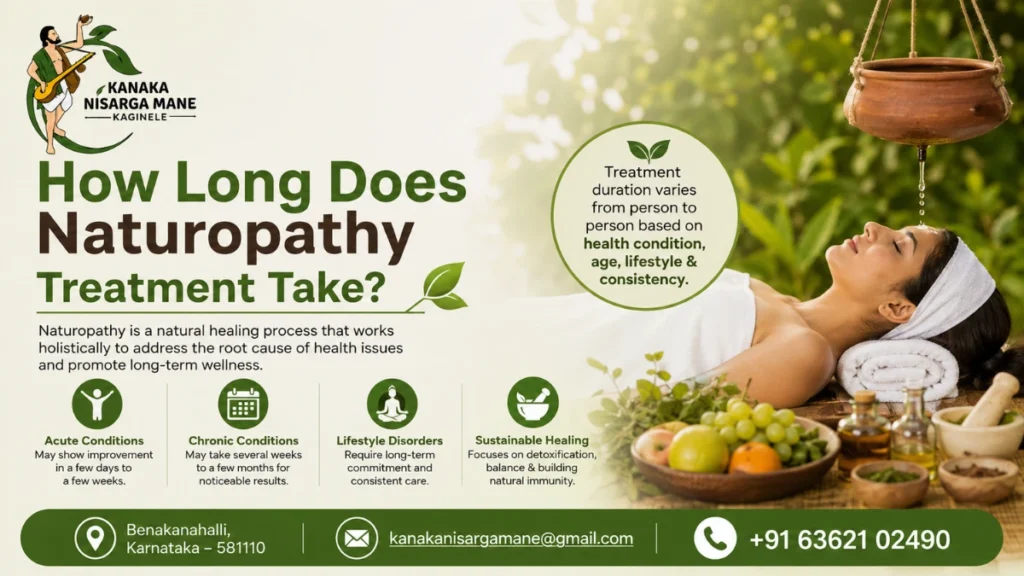
There is no universal treatment duration.
The length of a naturopathy program depends on factors such as:
- The individual’s health concerns
- Treatment goals
- Overall health
- Response to the selected therapies
- Lifestyle changes
- Type of program
- Practitioner recommendations
Some people may attend for wellness and lifestyle guidance, while others may participate in a longer structured program.
Therefore, it is better to ask the treatment centre about the expected duration after an individual assessment rather than relying on a fixed number of days.
What Should You Expect to Feel During Treatment?
The experience varies depending on the therapy.
Some approaches may feel relaxing, while physical therapies or exercises may involve temporary muscle effort or mild discomfort. Individual responses can differ.
It is important to tell the practitioner if you experience:
- Significant pain
- Dizziness
- Shortness of breath
- Allergic symptoms
- Unusual discomfort
- Worsening symptoms
“Natural” does not automatically mean “risk-free.” NCCIH specifically advises consumers to consider the safety and effectiveness of each complementary approach and to discuss complementary therapies with their healthcare providers.
What Are the Potential Benefits of a Naturopathy Program?
Potential benefits depend heavily on the specific therapy and health concern.
A structured naturopathy program may help some people develop healthier habits involving:
- Nutrition
- Physical activity
- Sleep
- Stress management
- Relaxation
- General wellness
Some individual practices used in naturopathy or integrative care have evidence for particular purposes. For example, NCCIH reports that yoga may support general wellness and stress management, while some mind-body practices have evidence for specific health outcomes.
However, it is important not to assume that naturopathy as a whole has been proven effective for every disease or condition. Evidence varies by therapy and indication.
Is Naturopathy Safe?
Safety depends on the therapy, the individual’s health status and the qualifications of the practitioner.
Before starting treatment, inform the practitioner about:
- Prescription medicines
- Over-the-counter medicines
- Herbal products
- Supplements
- Existing medical conditions
- Allergies
- Pregnancy or breastfeeding
- Previous surgeries or major medical treatments
Some complementary products can interact with conventional medicines. NCCIH recommends informing all healthcare providers about complementary practices and products being used.
Most importantly, do not stop prescribed medication or postpone necessary medical care simply because you are starting a naturopathy program.
Who May Consider Naturopathy?
People may explore naturopathy for different reasons, including:
- General wellness
- Healthy lifestyle improvement
- Nutrition guidance
- Stress management
- Physical activity support
- Complementary approaches to selected health concerns
- Relaxation and mind-body practices
Whether it is appropriate for a specific medical condition should be determined after considering the available evidence, risks and the person’s overall healthcare needs.
Why Choose a Personalized Naturopathy Approach?
Every individual has a different health history, lifestyle and set of goals.
A personalized approach can consider these differences before recommending therapies. This may include combining nutrition counseling with appropriate physical activity, yoga, relaxation techniques, physiotherapy or other suitable approaches.
At Kanaka Nisarga Mane, the information provided for the centre describes a multidisciplinary wellness model involving naturopathy, Ayurveda, physiotherapy, yoga, meditation and personalized nutrition.
The centre is located in Benakanahalli, Karnataka – 581110, and provides consultation and wellness services.
Naturopathy Treatment at Kanaka Nisarga Mane
Kanaka Nisarga Mane presents itself as a naturopathy, Ayurveda and holistic wellness centre in Karnataka.
According to the centre information provided, its services include:
- Naturopathy
- Ayurveda
- Physiotherapy
- Yoga and meditation
- Personalized diet and nutrition
- Manual therapy
- Therapeutic exercises
- Electrotherapy
The centre also provides accommodation options including general wards, semi-special accommodation, special wards and cottages.
For enquiries and consultation:
Kanaka Nisarga Mane
Address: Benakanahalli, Karnataka – 581110
Email: kanakanisargamane@gmail.com
Phone: +91 63621 02490
How to Prepare for Your First Naturopathy Consultation
Before your appointment, consider carrying:
- Previous medical reports.
- A list of current medicines.
- A list of supplements or herbal products you use.
- Details of previous treatments.
- Information about allergies.
- Your main health concerns and goals.
- Questions you want to ask the practitioner.
Being transparent about your medical history helps healthcare professionals make safer and more informed decisions.
Questions to Ask Before Starting Treatment
Before beginning a naturopathy program, ask:
- What therapies are being recommended?
- Why are these therapies appropriate for me?
- What evidence supports the recommended approach?
- Are there any risks or side effects?
- Could the treatment interact with my medicines?
- How long is the program expected to last?
- How will my progress be monitored?
- What should I do if my symptoms worsen?
- Should I continue seeing my regular healthcare provider?
These questions can help you make an informed decision.
FAQs
1. What happens during naturopathy treatment?
Treatment commonly begins with a health and lifestyle assessment, followed by an individualized plan that may include nutrition, exercise, yoga, relaxation techniques, physical therapies or other approaches.
2. What happens during the first naturopathy consultation?
The practitioner may discuss your health history, lifestyle, diet, symptoms, medications and goals before recommending an appropriate wellness or treatment plan.
3. Does naturopathy involve only natural medicines?
No. Depending on the practitioner, naturopathy can involve lifestyle changes, nutrition, exercise, stress reduction, physical therapies and other approaches in addition to natural products.
4. Is naturopathy treatment personalized?
It can be. Treatment plans may be adapted according to a person’s health history, lifestyle, goals and response to therapy.
5. Does naturopathy include diet plans?
Nutrition and dietary counseling are commonly used components of naturopathic care.
6. Can yoga be part of naturopathy treatment?
Yes. Yoga may be incorporated into some holistic wellness programs, depending on the individual’s needs and physical condition.
7. Is naturopathy painful?
Many naturopathic approaches are designed to be gentle, but the experience depends on the specific therapy. Some physical treatments or exercises can cause temporary discomfort.
8. How many days does naturopathy treatment take?
There is no fixed duration. Treatment length depends on the person’s health goals, condition, selected therapies and response to treatment.
9. Can I take naturopathy treatment with regular medicines?
Some complementary therapies may be used alongside conventional healthcare, but you should tell all your healthcare providers about the treatments, herbs and supplements you are using because interactions can occur.
10. Can naturopathy replace conventional medical treatment?
Naturopathy should not be used as a reason to postpone or replace proven medical treatment without appropriate medical advice.
11. Is naturopathy suitable for everyone?
Not necessarily. Suitability depends on the individual’s health status, medications, age and the particular therapy being considered.
12. What should I bring to a naturopathy consultation?
Bring previous medical reports, a current medication list, supplement information and details about your health concerns.
13. Does naturopathy include physiotherapy?
Some centres combine naturopathy with physiotherapy. At Kanaka Nisarga Mane, physiotherapy is listed among the centre’s wellness services.
14. Does naturopathy include meditation?
Meditation and relaxation practices may be incorporated into holistic wellness programs.
15. Is naturopathy scientifically proven for every disease?
No. Scientific evidence varies considerably between individual naturopathic therapies and health conditions. It is important to evaluate the evidence for the specific treatment being considered.


