
What Should I Eat During Naturopathy Treatment: When you begin naturopathy treatment, food becomes an important part of your daily routine. A suitable diet can help you maintain energy, support digestion, and provide the nutrients your body needs during a wellness program.
But there is no single naturopathy diet plan that works for everyone. Your food choices may depend on your age, lifestyle, digestion, health concerns, treatment goals, and the recommendations of your naturopathy practitioner.
At Kanaka Nisarga Mane, personalised diet and nutrition guidance can be incorporated into a broader naturopathy and wellness program.
What Foods Can You Eat During Naturopathy Treatment?
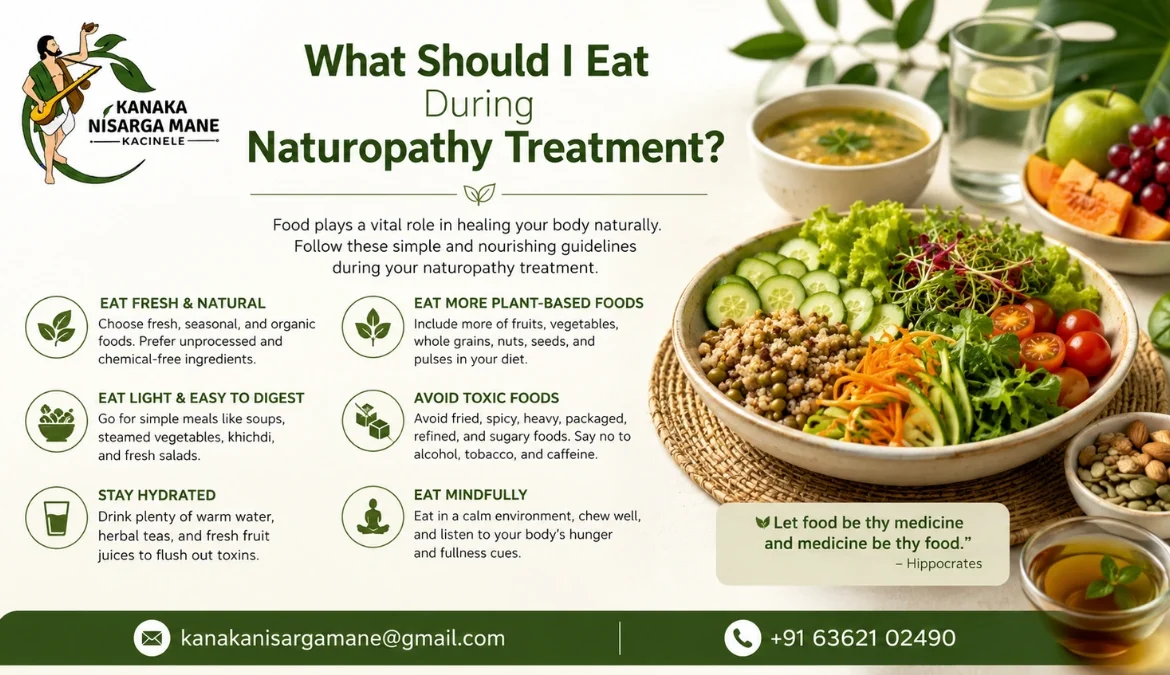
In general, a naturopathy-focused eating pattern emphasizes fresh, seasonal, minimally processed and nutrient-rich foods. Depending on your individual plan, you may include fruits, vegetables, whole grains, millets, pulses, sprouts, nuts and seeds.
Here are some commonly recommended food groups.
1. Fresh Seasonal Fruits
Fruits can be a convenient source of vitamins, minerals, fiber and naturally occurring carbohydrates. Depending on your treatment plan, you may include fruits such as:
- Papaya
- Apple
- Guava
- Orange
- Watermelon
- Pomegranate
- Banana
- Seasonal local fruits
Rather than following a fixed fruit list, choose varieties that suit your nutritional requirements and digestion.
2. Fresh Vegetables and Salads
Vegetables can add fiber and a wide range of nutrients to your meals. Leafy greens, cucumber, carrot, beetroot, tomato and other seasonal vegetables may be included.
Some people tolerate raw vegetables well, while others may find cooked vegetables easier to digest. Your practitioner can help determine which preparation is appropriate for you.
3. Whole Grains and Millets
Instead of relying heavily on refined grains, a balanced diet can include whole grains and traditional millets such as:
- Brown rice
- Oats
- Whole wheat
- Ragi
- Foxtail millet
- Little millet
- Pearl millet
- Barnyard millet
These foods can contribute carbohydrates and dietary fiber while making meals more satisfying.
4. Pulses, Legumes and Sprouts
Protein is an important part of a balanced diet. Depending on your individual requirements, options may include moong dal, lentils, chickpeas, beans and properly prepared sprouts.
If you experience gas or bloating after eating legumes, don’t simply eliminate them permanently. Discuss portion sizes and preparation methods with a nutrition professional.
5. Nuts and Seeds
Nuts and seeds can provide healthy fats, protein and other nutrients. Small portions of almonds, walnuts, flaxseeds, pumpkin seeds or sunflower seeds may be incorporated into meals when appropriate.
Because they are energy-dense, portion size matters.
6. Adequate Fluids
Staying hydrated is important during any wellness routine. Plain water should generally form the foundation of your fluid intake.
Depending on your individual treatment plan, other options may include:
- Warm water
- Unsweetened herbal beverages
- Clear vegetable soups
- Fresh, appropriately prepared vegetable drinks
Avoid assuming that drinking large quantities of juices or herbal preparations is automatically healthier. Your practitioner should guide you if these are part of your treatment program.
Foods You May Be Asked to Limit
During some naturopathy programs, practitioners may recommend reducing highly processed foods and products that are high in added sugar, excess salt or unhealthy fats.
These may include:
- Packaged snacks
- Sugary soft drinks
- Deep-fried foods
- Excess sweets and desserts
- Highly refined foods
- Fast food
- Foods with excessive additives
The goal should be to develop a sustainable eating pattern, rather than following unnecessarily restrictive rules.
Should You Eat Raw Food During Naturopathy Treatment?
Not necessarily.
Raw salads and fresh fruits are often included in wellness-oriented diets, but raw food is not suitable for everyone at every stage of treatment. People with digestive sensitivity may find certain cooked foods easier to tolerate.
For this reason, your naturopathy diet should be based on individual tolerance rather than a one-size-fits-all rule.
Is Fasting Part of Naturopathy Treatment?
Some naturopathy programs may incorporate fasting or periods of lighter eating. However, fasting is not appropriate for everyone.
People with certain medical conditions, nutritional requirements, pregnancy, or medication-related needs may require a different approach. Prolonged fasting should not be undertaken without appropriate professional supervision.
If fasting has been recommended as part of your naturopathy program, ask your practitioner about its duration, hydration requirements and how normal meals will be reintroduced.
A Simple Example of a Naturopathy-Friendly Meal Pattern
A typical day may look different from person to person. For illustration, a balanced pattern could include:
| Time | Example Food Choices |
|---|---|
| Morning | Warm water or another beverage recommended by your practitioner |
| Breakfast | Seasonal fruit, millet-based meal or another balanced option |
| Mid-morning | Fruit or another suitable light food |
| Lunch | Whole grain/millet + vegetables + dal or another protein source |
| Evening | Herbal beverage or light snack, depending on your plan |
| Dinner | A moderate, easily digestible meal with vegetables and an appropriate protein source |
Important: This is only an example and should not be considered an individualized medical diet chart.
What Should You Avoid During Naturopathy Treatment?
Rather than concentrating only on foods to eliminate, focus on improving the overall quality of your meals.
You may be advised to reduce:
- Highly processed packaged foods
- Excess added sugar
- Deep-fried foods
- Sugary beverages
- Excessively salty foods
- Heavy meals that cause digestive discomfort
- Unnecessary alcohol or other substances that conflict with your treatment plan
Your practitioner may recommend additional restrictions depending on your specific condition and treatment objectives.
How Does Diet Fit Into Naturopathy Treatment?
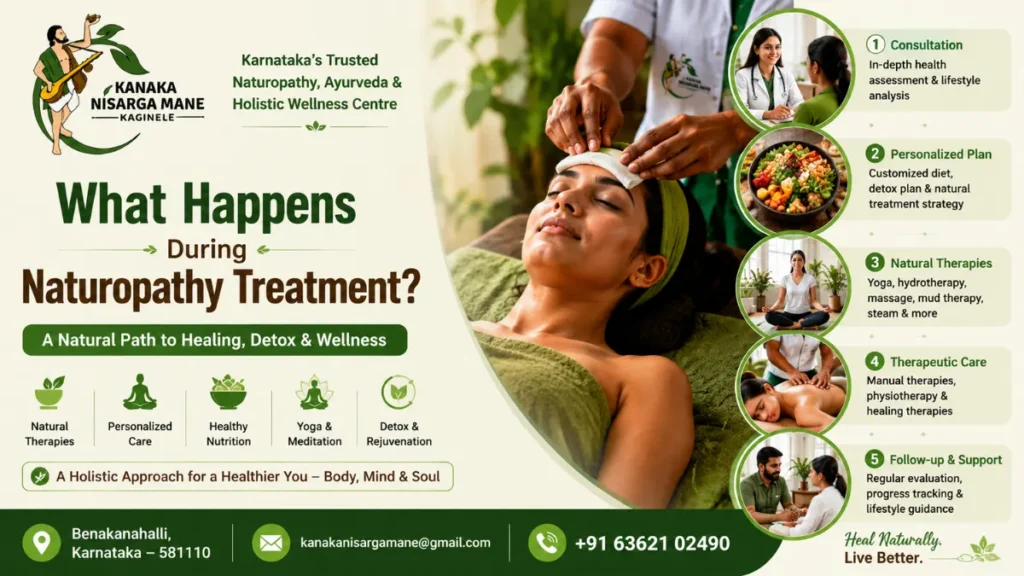
Diet is generally only one component of a naturopathy program. Depending on the centre and the individual’s needs, a wellness plan may also involve lifestyle changes, physical activity, yoga, relaxation practices, nutrition counselling and other therapies.
At Kanaka Nisarga Mane in Kaginele, Karnataka, the wellness approach combines naturopathy and Ayurveda with services such as physiotherapy, yoga, meditation and personalised nutrition support.
The centre states that it has 10+ years of clinical experience and provides personalised wellness plans. Its nutrition service includes individualised diet planning and nutritional counselling.
Why Is a Personalised Diet Better Than a Generic Diet Chart?
Two people can have completely different responses to the same food.
For example, one person may comfortably eat raw salads, while another may experience digestive discomfort. Similarly, carbohydrate, protein and calorie requirements vary according to age, activity level and health needs.
A personalised plan can therefore consider:
- Your current health status
- Treatment objectives
- Food preferences
- Digestive tolerance
- Lifestyle and activity
- Nutritional requirements
- Existing medications or dietary restrictions
This is particularly important if you are receiving treatment for a chronic health condition.
FAQs
1. What should I eat during naturopathy treatment?
A naturopathy diet generally includes fresh fruits, vegetables, whole grains, millets, pulses, legumes, sprouts, nuts and seeds. Your exact food plan should be adjusted according to your health needs and treatment goals.
2. Can I eat rice during naturopathy treatment?
Yes, rice can be included when it fits your personalised diet plan. Depending on your nutritional needs, your practitioner may also suggest brown rice or other whole grains and millets.
3. Which fruits are good during naturopathy treatment?
Seasonal fruits such as papaya, guava, apple, orange, pomegranate and watermelon can be included in many balanced diets. The quantity and choice should suit your individual requirements.
4. Can I eat vegetables during naturopathy treatment?
Yes. A variety of fresh vegetables can provide fiber and essential nutrients. They may be eaten raw, steamed, lightly cooked or prepared according to your practitioner’s recommendations.
5. Are salads recommended in a naturopathy diet?
Fresh salads may be included for some people. However, individuals with digestive sensitivity may tolerate cooked vegetables better, so preparation should be based on personal tolerance.
6. Can I eat millets during naturopathy treatment?
Millets such as ragi, foxtail millet, little millet and barnyard millet can be nutritious options. Your practitioner can recommend suitable portions based on your overall diet.
7. Are sprouts good for a naturopathy diet?
Sprouts can provide plant-based protein, fiber and other nutrients. They should be prepared safely and included only if they are suitable for your digestion and individual diet plan.
8. Can I drink fruit juice during naturopathy treatment?
Fresh juice may be included in some naturopathy programs, but whole fruit generally provides more fiber. Large quantities of juice are not automatically healthier and should not replace balanced meals unless specifically recommended.
9. How much water should I drink during naturopathy treatment?
Fluid requirements vary depending on factors such as climate, activity level, age and health status. Drink adequate fluids and follow any specific hydration guidance provided by your healthcare practitioner.
10. Is fasting necessary during naturopathy treatment?
Fasting is not necessary or appropriate for everyone. If it is included in a treatment program, it should be planned and supervised according to the individual’s health and nutritional requirements.
11. Can I drink tea or coffee during naturopathy treatment?
Some treatment programs may recommend limiting caffeinated beverages. Whether you need to reduce or avoid tea or coffee depends on your individual treatment plan and overall health.
12. Can I eat nuts during naturopathy treatment?
Nuts such as almonds and walnuts can provide protein and healthy fats and may fit into a balanced diet. Because they are calorie-dense, appropriate portions are important.
13. What foods should I avoid during naturopathy treatment?
You may be advised to reduce highly processed foods, deep-fried foods, sugary drinks, excess sweets and foods containing excessive salt or unhealthy fats.
14. Can I eat outside food while undergoing naturopathy treatment?
It is generally easier to follow your nutrition plan when meals are freshly prepared and their ingredients are known. If you need to eat outside, choose simple preparations that fit your prescribed diet.
15. Can I eat dinner during naturopathy treatment?
Yes. Dinner can be part of a healthy treatment diet. Many people benefit from keeping their evening meal moderate and choosing foods that are comfortable to digest.
16. Is a naturopathy diet suitable for weight loss?
A balanced, nutrient-conscious eating pattern may support healthy weight management. However, weight-loss diets should be personalised rather than based on extreme food restriction or prolonged fasting.
17. Can children follow a naturopathy diet?
Children have different nutritional and growth requirements. Any significant dietary changes for children should be discussed with an appropriately qualified healthcare professional.
18. Can people with diabetes follow a naturopathy diet?
People with diabetes may require careful meal planning based on medication, blood glucose levels, carbohydrate intake and individual health needs. A naturopathy diet should not replace prescribed diabetes care.
19. How long should I follow a naturopathy diet?
There is no universal duration. The appropriate dietary pattern depends on your treatment plan, nutritional needs and progress. Your practitioner can advise when and how to transition to a long-term eating routine.
20. Where can I get personalised naturopathy diet guidance in Karnataka?
Kanaka Nisarga Mane in Benakanahalli, Kaginele, Karnataka, provides personalised nutrition support as part of its broader naturopathy and wellness services. You can contact the centre to discuss your requirements and treatment options.


