

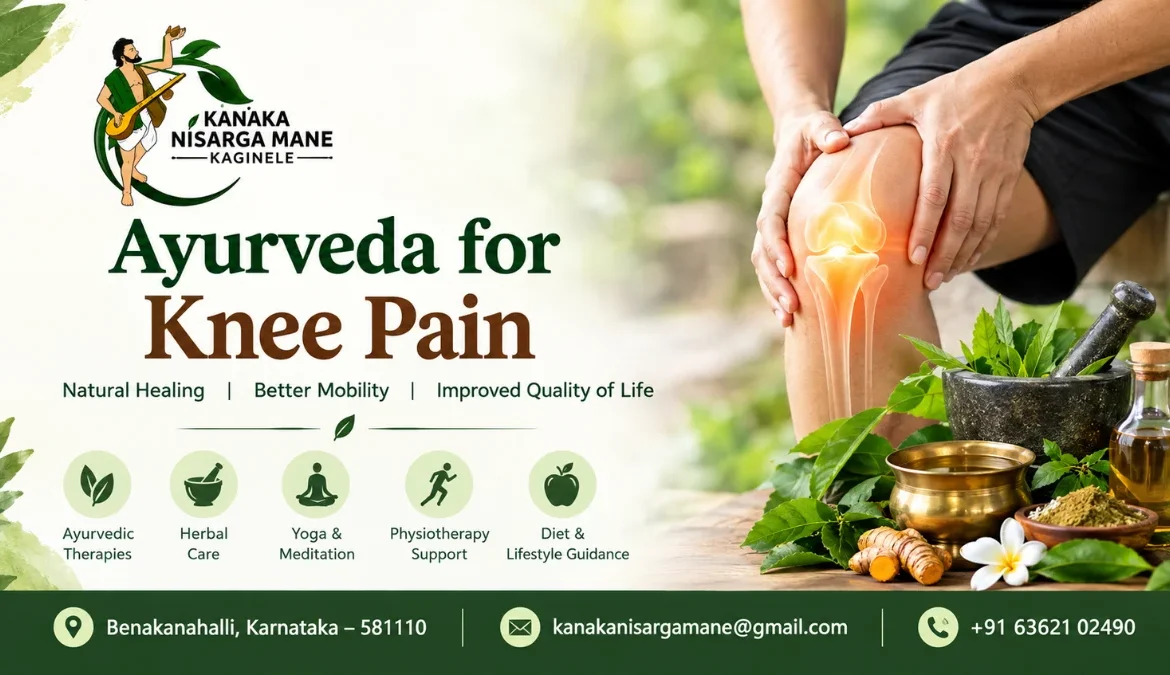
Knee pain can make everyday activities such as walking, climbing stairs, exercising, or even getting up from a chair uncomfortable. It may develop because of osteoarthritis, previous injuries, overuse, age-related changes, muscle weakness, or other underlying conditions.
Ayurveda for knee pain takes a holistic approach that considers the individual’s symptoms, lifestyle, diet, physical activity, and overall health. Depending on the person’s condition, an Ayurvedic care plan may include traditional therapies, herbal preparations, gentle movement, dietary guidance, and lifestyle modifications.
At Kanaka Nisarga Mane in Kaginele, Karnataka, Ayurveda is offered alongside naturopathy, physiotherapy, yoga, and nutrition-based care, allowing treatment plans to be tailored according to individual needs.
What Causes Knee Pain?
Knee pain does not have one single cause. Common reasons include:
- Osteoarthritis and other degenerative joint changes
- Previous sports or accidental injuries
- Muscle weakness around the knee
- Excessive or repetitive physical activity
- Poor movement patterns
- Age-related changes
- Being overweight or obese
- Tendon or ligament problems
- Inflammatory joint conditions
Persistent knee pain should be assessed by a qualified healthcare professional to determine the underlying cause before beginning any treatment program.
How Does Ayurveda Approach Knee Pain?
In Ayurveda, joint discomfort is traditionally understood through an individual’s constitution, lifestyle, digestion, activity level, and the characteristics of the symptoms.
Rather than using the same therapy for everyone, Ayurvedic practitioners generally assess the person and then develop an individualized plan.
Depending on the assessment, an Ayurvedic approach may involve:
1. Ayurvedic Oil Therapies
Traditional external oil applications and massage techniques may be incorporated into an Ayurvedic treatment plan.
The oils and techniques used can vary according to the individual’s condition and the practitioner’s assessment. Massage may also be combined with other therapies rather than used as a standalone treatment.
2. Traditional Ayurvedic Therapies
Ayurveda includes several traditional therapies that may be considered for musculoskeletal complaints.
The appropriate therapy depends on the person’s health status, symptoms, age, medications, and other clinical factors. Treatment should therefore be supervised by a qualified practitioner rather than selected solely from online recommendations.
3. Herbal Preparations
Certain Ayurvedic herbs and formulations are traditionally used to support joint and musculoskeletal health.
However, natural does not automatically mean risk-free. Herbal products can interact with medicines or may not be appropriate for people with certain medical conditions. A qualified practitioner should determine whether a particular formulation is suitable.
4. Gentle Exercise and Yoga
Movement is an important part of maintaining joint function.
Depending on the cause and severity of knee pain, an appropriate program may include gentle stretching, strengthening exercises, mobility work, or yoga under suitable guidance.
Exercises should be modified when necessary, particularly if pain is severe or follows an injury.
5. Diet and Lifestyle Guidance
Ayurvedic care often considers diet and daily habits as part of a broader wellness plan.
A practitioner may review eating patterns, activity levels, sleep, weight management, and other lifestyle factors when developing an individualized plan.
For people with persistent knee pain, nutrition and physical activity may complement—rather than replace—appropriate medical or physiotherapy care.
Can Ayurveda Help With Knee Pain?
Ayurvedic therapies may help some people manage symptoms and support mobility and overall wellbeing, but results can vary considerably.
The cause of knee pain matters. For example, the management of osteoarthritis may differ from the management of a ligament injury or inflammatory arthritis.
It is therefore important to identify the underlying problem instead of assuming that every type of knee pain requires the same Ayurvedic treatment.
Ayurveda can also be used as a complementary approach alongside appropriate medical care, physiotherapy, exercise, or other evidence-based interventions when advised by a healthcare professional.
Ayurveda for Knee Pain and Osteoarthritis
Osteoarthritis is one of the common causes of chronic knee pain, particularly among older adults. It can involve pain, stiffness, reduced mobility, and difficulty performing everyday activities.
A holistic management plan may focus on:
- Maintaining healthy body weight
- Improving strength around the knee
- Staying physically active within comfortable limits
- Supporting mobility
- Managing daily activities that aggravate symptoms
- Using appropriate therapeutic approaches under professional supervision
Ayurvedic therapies may be incorporated into such a plan depending on the individual’s health and treatment goals.
However, Ayurveda should not be presented as a guaranteed cure for osteoarthritis or as a replacement for necessary medical evaluation.
What Happens During an Ayurvedic Knee Pain Consultation?
A personalized consultation may begin with a discussion of:
- Where the pain occurs
- How long the symptoms have been present
- Whether the pain is constant or activity-related
- Knee stiffness and mobility
- Previous injuries or surgeries
- Current medications and health conditions
- Physical activity and daily routine
- Diet and lifestyle
- Existing medical reports, where relevant
This information helps the practitioner understand the individual’s situation and decide whether Ayurvedic care is appropriate.
At Kanaka Nisarga Mane, Ayurvedic care is part of a broader wellness approach that can include naturopathy, physiotherapy, yoga, and nutrition guidance.
Ayurveda, Physiotherapy and Yoga: Can They Be Combined?
Knee pain management does not always need to rely on one type of therapy.
Depending on the individual’s condition, a multidisciplinary approach may include:
Ayurveda: Traditional therapies and individualized Ayurvedic care.
Physiotherapy: Exercise-based rehabilitation, mobility work, strengthening, and functional recovery.
Yoga: Appropriate movement, flexibility, breathing practices, and relaxation techniques.
Nutrition: Dietary guidance supporting overall health and healthy weight management.
Combining approaches should be based on the individual’s diagnosis, health status, and professional advice.
When Should You See a Doctor for Knee Pain?
Not all knee pain should be managed at home or with complementary therapies.
Seek prompt medical assessment if knee pain is associated with:
- A significant injury or fall
- Inability to put weight on the leg
- Severe swelling
- A visibly deformed joint
- Fever or signs of infection
- Sudden severe pain
- A locked knee
- Significant redness or warmth
- Persistent or worsening symptoms
A healthcare professional can determine whether imaging, medication, specialist evaluation, or other treatment is necessary.
Why Choose Kanaka Nisarga Mane for Holistic Care?
Kanaka Nisarga Mane, located in Kaginele, Karnataka, provides an integrated wellness environment combining traditional and supportive approaches.
The centre offers:
- Ayurveda
- Naturopathy
- Physiotherapy
- Yoga and meditation
- Nutrition and diet guidance
- Residential accommodation options
Its multidisciplinary approach allows individual needs to be considered rather than relying on a single therapy for every person.
For people considering Ayurvedic care for knee discomfort, an initial consultation can help determine which therapies may be appropriate.
FAQs
Is Ayurveda good for knee pain?
Ayurveda may be used as a complementary approach for managing some types of knee discomfort. The suitability and expected benefits depend on the underlying cause, severity, and individual health condition.
Which Ayurvedic treatment is used for knee pain?
Ayurvedic care may include traditional oil therapies, herbal preparations, therapeutic procedures, diet and lifestyle guidance, and appropriate movement practices. The exact approach should be determined after an individual assessment.
Can Ayurveda cure knee arthritis?
Ayurveda should not be described as a guaranteed cure for arthritis. It may form part of an individualized plan to support symptom management and overall wellbeing alongside appropriate conventional care.
Can I combine Ayurveda with physiotherapy?
In some cases, Ayurveda and physiotherapy can be used as complementary approaches. However, the combination should be planned around the person’s diagnosis, medications, physical limitations, and overall health.
How long does Ayurvedic treatment for knee pain take?
There is no universal treatment duration. It depends on the cause and duration of the pain, the person’s health, the therapies selected, and how they respond to treatment.
Is Ayurvedic treatment safe for everyone?
Not necessarily. Some Ayurvedic medicines and therapies may be unsuitable for people with particular medical conditions or those taking certain medications. Always disclose your medical history and current medicines to the practitioner.
Get Personalized Guidance for Knee Pain
Living with recurring knee pain can affect mobility, exercise, work, and everyday activities. Understanding the cause of the pain is the first step toward choosing an appropriate management approach.
If you are considering Ayurveda for knee pain, a personalized assessment can help determine whether Ayurvedic therapies, physiotherapy, yoga, nutrition, or a combination of approaches may be suitable for you.
Kanaka Nisarga Mane
Benakanahalli, Kaginele, Karnataka – 581110
Phone: +91 63621 02490
Email: kanakanisargamane@gmail.com
Medical note: This article is for general educational purposes and is not a substitute for diagnosis or treatment from a qualified healthcare professional. Individual results from any therapy can vary.


